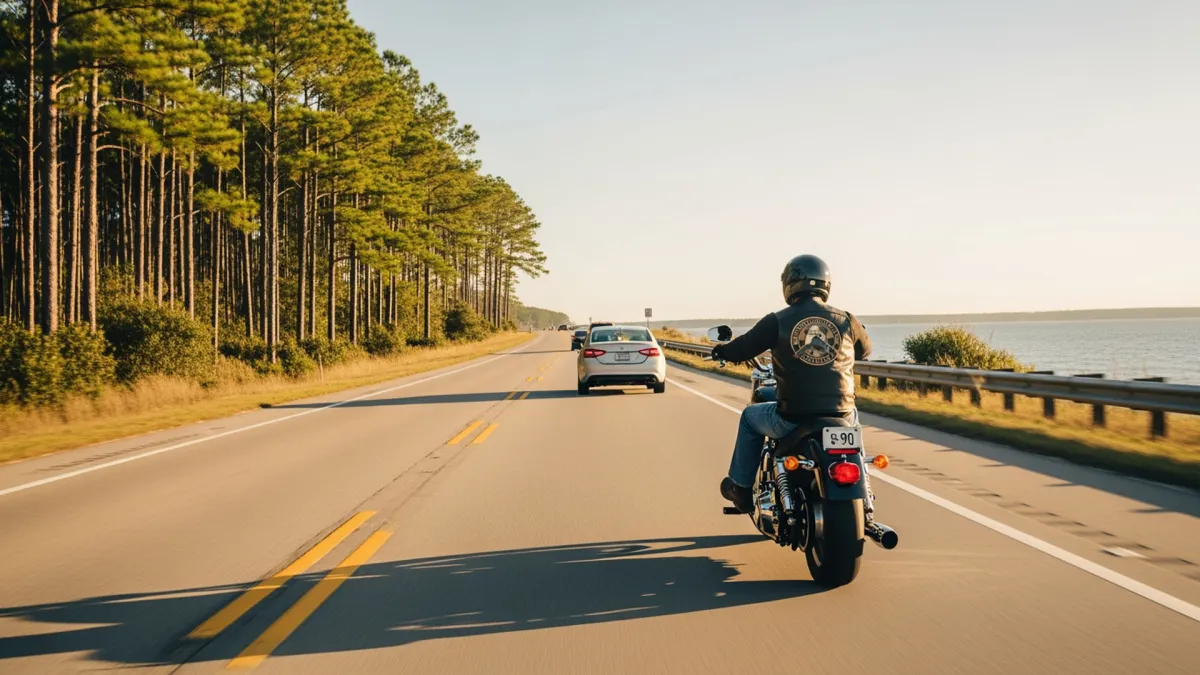
Florida's Helmet Law and the $10,000 Rule: What Pensacola Riders Get Wrong
Ask ten Pensacola riders about Florida's helmet law and you will get ten different answers, and most of them are only half right. Florida does let adult riders go without a helmet, but only under a specific condition tied to a dollar amount most people misunderstand. And the way that rule interacts with the rest of Florida's insurance system is exactly where riders get burned after a crash. If you ride the Scenic Highway or head out to Perdido Key with the wind on your face, here is the straight version of what the law actually requires.
What the Law Actually Says
Florida allows a rider who is 21 or older to ride without a helmet if they carry at least 10,000 dollars in medical benefits coverage for injuries sustained in a motorcycle crash. A rider under 21 must wear a DOT-approved helmet every time, regardless of coverage. That is the whole legal test in two sentences, but each piece of it matters more than riders realize.
- ✓ Age 21 is the line. If you are under 21, the helmet is legally required every ride on every road, with no coverage exception.
- ✓ The $10,000 is not optional if you go bare-headed. The exemption for adults is conditioned on carrying that medical coverage. No coverage means no legal helmet-free ride.
- ✓ The helmet has to be DOT-approved. For riders who must wear one, a novelty shell that does not meet the federal standard does not satisfy the law.
- ✓ It is on you to actually have the coverage. Riding helmet-free without the required medical coverage in place is riding outside the law.
The Trap: $10,000 Does Not Go Very Far
Here is what the statute does not tell you. Ten thousand dollars is the legal minimum to ride without a helmet. It is nowhere near enough to cover a real motorcycle injury. A single ambulance ride, an emergency room visit, and a set of scans in the Pensacola area can blow through 10,000 dollars before you have had surgery, physical therapy, or a single follow-up appointment. Riders read the number as protection. It is really just a legal threshold for a personal choice, and it says nothing about how a serious crash actually gets paid for.
Why PIP Will Not Save You on a Bike
A lot of riders confuse the 10,000 dollar helmet-exemption coverage with PIP, the no-fault coverage that automatically pays a car driver's medical bills. They are not the same thing, and it matters, because motorcycles are excluded from PIP entirely. The no-fault system that quietly backs up every car on I-10 does not extend to your motorcycle. So a rider can have a legal, insured setup on paper and still be badly underprotected in practice. The medical coverage tied to the helmet rule is a floor for riding legally without a helmet. It is not a plan for what a real wreck costs.
How a No-Helmet Choice Gets Used Against You
Whether to wear a helmet is a personal decision for an adult rider who meets the coverage rule, and this is not a lecture about that choice. But it is worth understanding how the decision can echo through a claim. Florida uses a modified comparative negligence system with a 51 percent bar, added in the 2023 reforms. In plain terms, you can still recover compensation if you were partly at fault, as long as you were not more than half responsible, and your recovery is reduced by your share of the blame. If you are found more than 50 percent at fault, you recover nothing. An insurance company defending a claim will look for any angle to push more of that blame onto the rider, and a no-helmet choice, especially in a head or neck injury, is a favorite. Knowing the rules ahead of time and having the right coverage in place puts you in a far stronger position if you ever have to make a claim.
- ✓ Ten thousand dollars is a legal minimum, not real protection. Plan your coverage for an actual injury, not for the statute.
- ✓ PIP does not cover motorcycles. Do not count on the no-fault system that protects cars, because it leaves riders out.
- ✓ UM/UIM is your lifeline. Florida does not require drivers to carry bodily injury coverage, so the driver who hits you may have nothing at all for your injuries.
- ✓ Expect the helmet question. If you rode without one, assume the insurer will raise it to argue you share the blame, and be ready for that fight.
The Bottom Line for Pensacola Riders
The helmet law gives adult riders a legal choice, but the 10,000 dollar coverage tied to it is a threshold, not a safety net. If you were hurt in a crash and now you are staring at bills that dwarf that number, or an insurer is hinting your helmet choice is your problem, get real answers before you accept anything. Understanding the comparative fault rule and carrying the right coverage is how a Panhandle rider keeps a no-helmet choice from quietly costing them their claim.
This article is general information about Florida law and is not legal advice. Speak with a licensed Florida attorney about the specifics of your case.

Led by Dana Brooks, Dana Brooks, Attorney at Law in Pensacola fights for injured motorcyclists. Reach out to their Pensacola motorcycle accident attorneys anytime you need real answers.